Banking Instruments
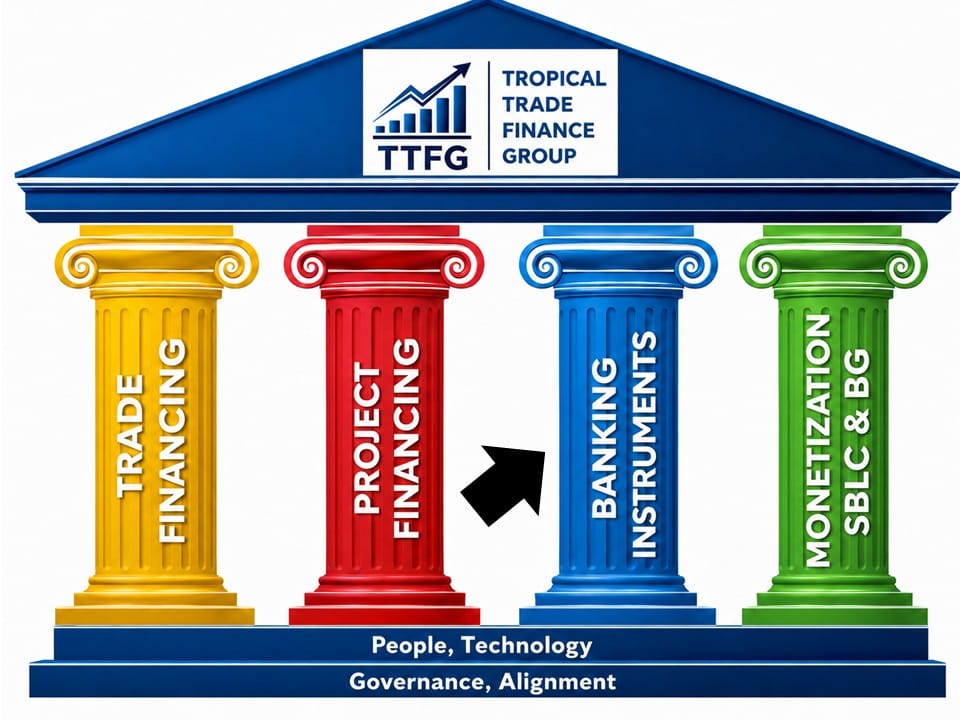
Banking instruments like SBLC, LC at Sight, Usance LC, DLC, and BG are financial tools used in international trade and finance to guarantee payments, secure transactions, and manage risk between buyers and sellers. These instruments are the backbone of global trade, ensuring trust between parties who may be continents apart. They balance speed, security, and flexibility depending on the needs of buyers and sellers.
Key Banking Instruments Explained
Standby Letter of Credit (SBLC)
- Act as a payment guarantee if the buyer fails to fulfill obligations.
- Commonly used in long-term contracts, construction projects, and trade deals.
- Functions as a "safety net" rather than a primary payment method.
Letter of Credit at Sight (LC at Sight)
- Payment is made immediately once the seller presents required documents.
- Ensures quick settlement, reducing risk for exporters.
- Often used in fast-moving trade transactions.
Usance Letter of Credit (Usance LC)
- Provides a deferred payment period (e.g., 30, 60, 90 days after shipment).
- Help buyers manage cash flow while giving sellers assurance of payment.
- Useful in industries with longer production or delivery cycles.
DLC – DOCUMENTED LETTER OF CREDIT
A Documentary Letter of Credit (DLC) is a bank's written promise to pay a seller on behalf of a buyer. The bank pays the seller only when the seller provides specific documents, such as a bill of lading, showing the goods were shipped.
Most DLCs follow global rules set by the International Chamber of Commerce. These are called the Uniform Customs and Practice for Documentary Credits (UCP 600).
A DLC creates trust in international trade. The buyer does not pay until the goods are proven to be on the move. The seller is guaranteed payment if they provide the correct paperwork. Banks deal with documents, not physical goods.
How It Works: A Simple Example
Imagine you buy furniture from a factory in Vietnam.
- The Promise: Your bank creates a DLC promising to pay the Vietnamese factory.
- The Shipment: The factory ships the furniture and gets a delivery receipt (the "document").
- Proof: The factory gives the receipt to their local bank.
- Payment: The local bank checks the receipt, and your bank transfers the money.
Most DLCs follow global rules set by the International Chamber of Commerce. These are called the Uniform Customs and Practice for Documentary Credits (UCP 600).
Types of DLCs
- Irrevocable DLC: Cannot be changed or canceled without everyone agreeing. This is the most common type.
- Confirmed DLC: A second bank adds its own guarantee to pay, which gives the seller extra safety.
- Transferable DLC: The seller can transfer part of the payment to their own suppliers
Bank Guarantee (BG)
A Bank Guarantee (BG) is a written promise from a financial institution to cover a debt or perform a service if a specific party fails to do so. It acts as a financial safety net. It builds trust between businesses by reducing financial risk. BG is a written undertaking by a bank to pay a specified sum to a beneficiary if its customer fails to meet contractual obligations. In simple terms, it is a bank-backed promise of payment.
The Three Parties Involved
- The Applicant: The buyer or contractor who needs the guarantee.
- The Beneficiary: The seller, landlord, or project owner who receives the guarantee.
- The Issuing Bank: The bank that promises to pay if a buyer defaults.
Common Types of Bank Guarantees
- Performance Guarantee: Ensures a contractor finishes a job exactly as agreed in the contract.
- Financial Guarantee: Ensures that a buyer pays for goods or services on time.
- Bid Bond: Ensures a business honored its bid terms when submitting a price estimate for a new project.